
How to Play the Fishbowl Game
Triple your fun with this delightful mishmash of popular party games.
The Fishbowl Game – also known as Succotash – is a quirky little party game where players have to guess the same set of phrases in three different rounds. Sounds easy, right? Well, the catch is that each round has more challenging rules than the previous one, rewarding players who are good at remembering things and making quick connections.

Printable Word List for the Fishbowl Game
The three rounds of the Fishbowl Game are: 1) Description, 2) Charades, and 3) One Word Only. After each round, the phrases all go back in the proverbial fishbowl (actually it can be any type of container), so players get more and more familiar with the words they’re guessing. That’s a good thing, because guessing correctly in the last round is virtually impossible without some idea of what’s in the bowl.
Sound like fun? It is. Read on for the full rules and some handy printables you can use for your own game.
The Fishbowl Game at a Glance
Type: Team Guessing Game
Time: 30 minutes or more
Players: 4+
Ages: 12 and up
What You Need
Fishbowl Game Rules
Here are some starter rules for the Fishbowl Game. It’s a flexible game, so don’t hestitate to jazz things up with your own house rules once you get familiar with the basic structure.
1. Divide players into two even teams and determine which team goes first.
There is a small advantage to going first in this game. To make things as fair as possible, alternate which team goes first in each round.
2. Description Round: Each team gets one minute to guess phrases based on a description.
The team selects a Captain who describes what’s on each slip of paper without using any words in the phrase. After each correct guess, the Captain draws a new phrase from the fishbowl. When time is up, the other team gets a chance. Repeat until all phrases have been guessed and tally up the points for each team. Teams must use different Captains for each turn.
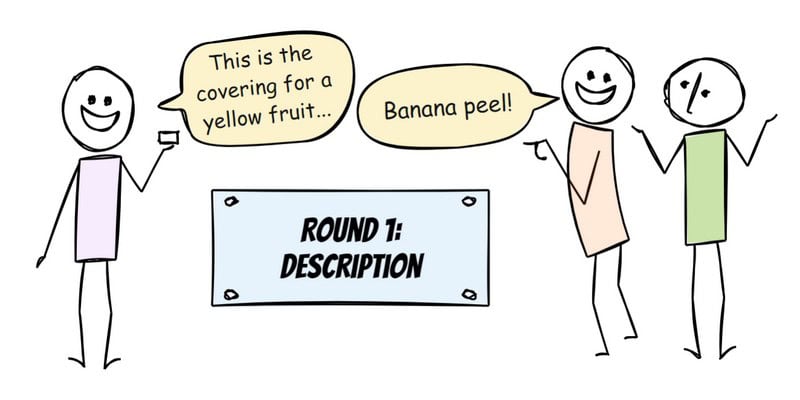
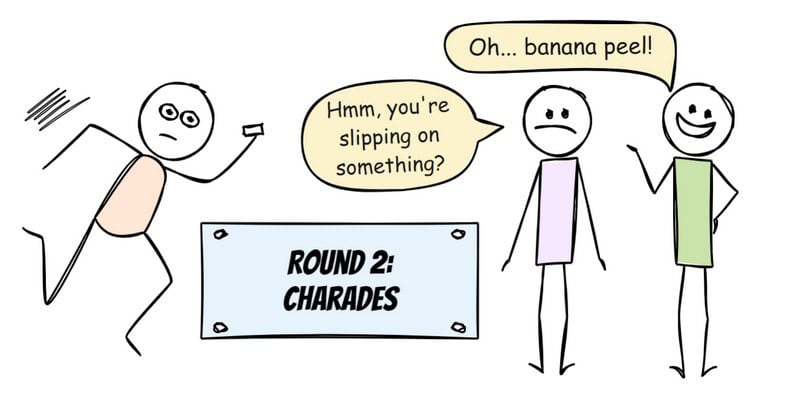
3. Charades Round: Put the slips of paper back in the bowl and repeat the previous round but using only body language.
As in Charades, the Captain may not speak, mouth words, or make noises of any kind.
4. One-Word Round: Put the slips of paper back and repeat the previous rounds but this time using only a single word as the clue for each phrase.
Was everyone paying attention in the first two rounds? Now the Captain can only use one word to describe each phrase.

5. Tally up the points from all three rounds. The team with the most points wins.
Optional: In the unlikely event of a tie, you may want to keep a few extra phrases on hand for a sudden death round of Charades.
Here’s a PDF file of the Fishbowl Game rules you can print out for game night:

Variations
Here are some of the more common and/or interesting variations on the Fishbowl Game:
Have the players make the prompts. You don’t have to prepare your Fishbowl phrases in advance. You can have the players do it at the start of the game. Simply provide them with slips of paper and have them write down three different things each: a person, a place, and a thing.
This gets players more involved in the game and can be quite funny. However, it does require some extra time, and there’s always the possibility that players will write down things that no one else can guess. Reading other people’s handwriting can also be an issue.
Extra rounds. There’s nothing that says you can’t continue the fun past the first three rounds. You just have to make sure the additional rounds get more and more challenging, as the players will become very familiar with the phrases. For example, you could have a Pictionary round, or another Charades round where players have to act out the phrases under a bed sheet.